
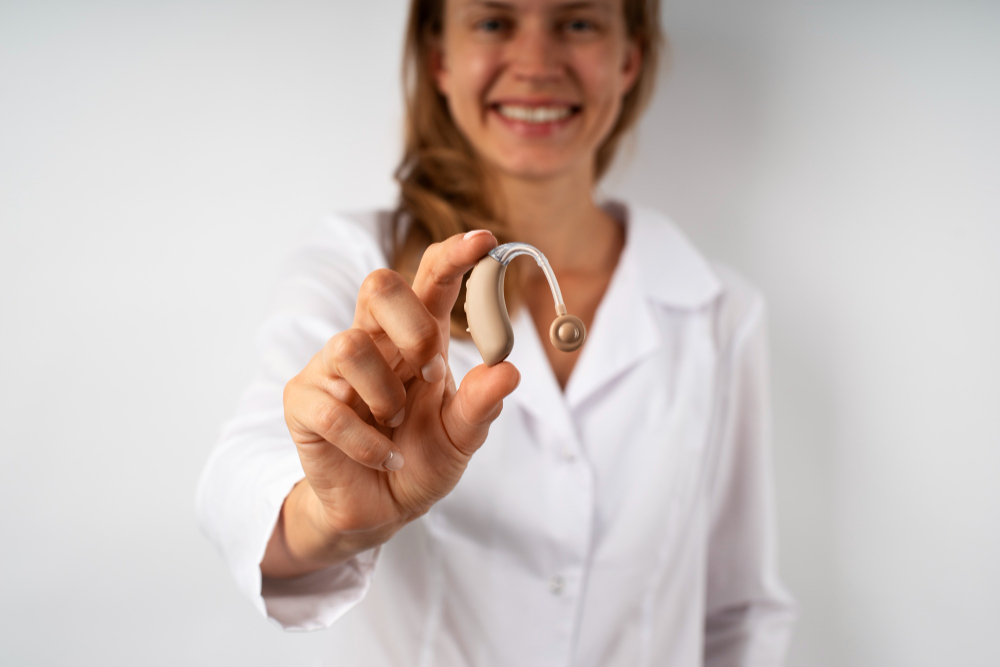
If you can’t hear the world around you, it can be devastating to your quality of life. At Wiesman Nasal and Sinus, we’re happy to have Neal Davis-Ruperto , Audiometrist, as part of our team. Supported by extensive training and qualifications, he can help you hear clearly as a Licensed Hearing Instrument Specialist.
Neal specializes in audiology to evaluate, diagnose, and treat hearing loss. With the right hearing aid, he can help you achieve enhanced sound quality to improve your overall well-being. Our office features a variety of hearing aids suitable for a wide range of needs and preferences, including both behind-the-ear and in-the-ear styles. Neal knows that your hearing needs are unique to your lifestyle, and he takes the time to listen and understand in order to find the best solution to help you hear better.
Request an AppointmentHow Do Hearing Aids Work?
A hearing aid works similarly to your ear. It consists of the same basic concept to make the sounds around you clear and easily understood. Generally, hearing aids are digital devices powered by a battery to allow a small microphone to collect sounds from your environment. It’s then amplified by converting the incoming sound into a digital code. It analyzes and adjusts the sounds based on your specific needs. The amplified sounds are converted back into sound waves, which are delivered through speakers to your ears.
Neal Davis-Ruperto provides audiology testing to evaluate your hearing loss to create a customized treatment plan.
Different Styles of Hearing Aids
There are many different hearing aid styles. Neal will help you find the one that best meets your needs and preferences, such as:
- Completely in the Canal: Specially molded to fit inside of your ear canal. It’s often recommended for adults who have mild-to-moderate hearing loss.
- In the Canal: Adults who have mild-to-moderate hearing loss can choose a hearing aid that’s custom fit to rest partly in your ear canal.
- In the Ear: Mild-to-severe hearing loss can be treated with an in-the-ear device.
- Behind the Ear: The device hooks over the top of the ear and rests behind it. There is a tube connecting the earpiece that fits inside the ear canal. This is suitable for all ages and types of hearing loss.
- Receiver in Canal: Similar to behind-the-ear devices, except a wire is used instead of tubing.
- Open Fit: This style keeps the canal open while allowing high- and low-frequency sounds to be amplified.
Adjusting to Your Hearing Aid
Getting used to hearing all the new sounds with your new hearing aids may take some time. As the days pass, you’ll notice you’re able to listen to sounds better as you get used to the amplification. As you transition to a life with improved hearing, here are a few helpful tips to keep in mind:
- Practice hearing in different environments with a variety of sounds.
- Maintain your follow-up visits for adjustments to ensure that your hearing aid is performing at its best.
- Wear your hearing aids regularly.
- Maintain your hearing aids to ensure they last.